5 Classic Flatirons Climbs in Boulder, CO: An AMGA Guide’s Picks


By Woody Lowder AMGA-certified Rock Guide · Updated 06/2026
The five classic Flatirons climbs in Boulder are the Direct East Face of the First Flatiron, the Direct East Face of the Third Flatiron, the East Face of the Second Flatiron, the East Face of Seal Rock, and the North Face of The Maiden. These multi-pitch sandstone routes are the must-do objectives for any climber visiting Colorado’s Front Range.
At The Mountain Guides — guiding climbers across the Mountain West since 1968 — our AMGA-certified guides lead these routes through spring, summer, and fall. Below we break down what to expect on each: grade, length, the movement you’ll remember, and what makes each one worth a full day.
What Are the Boulder Flatirons?
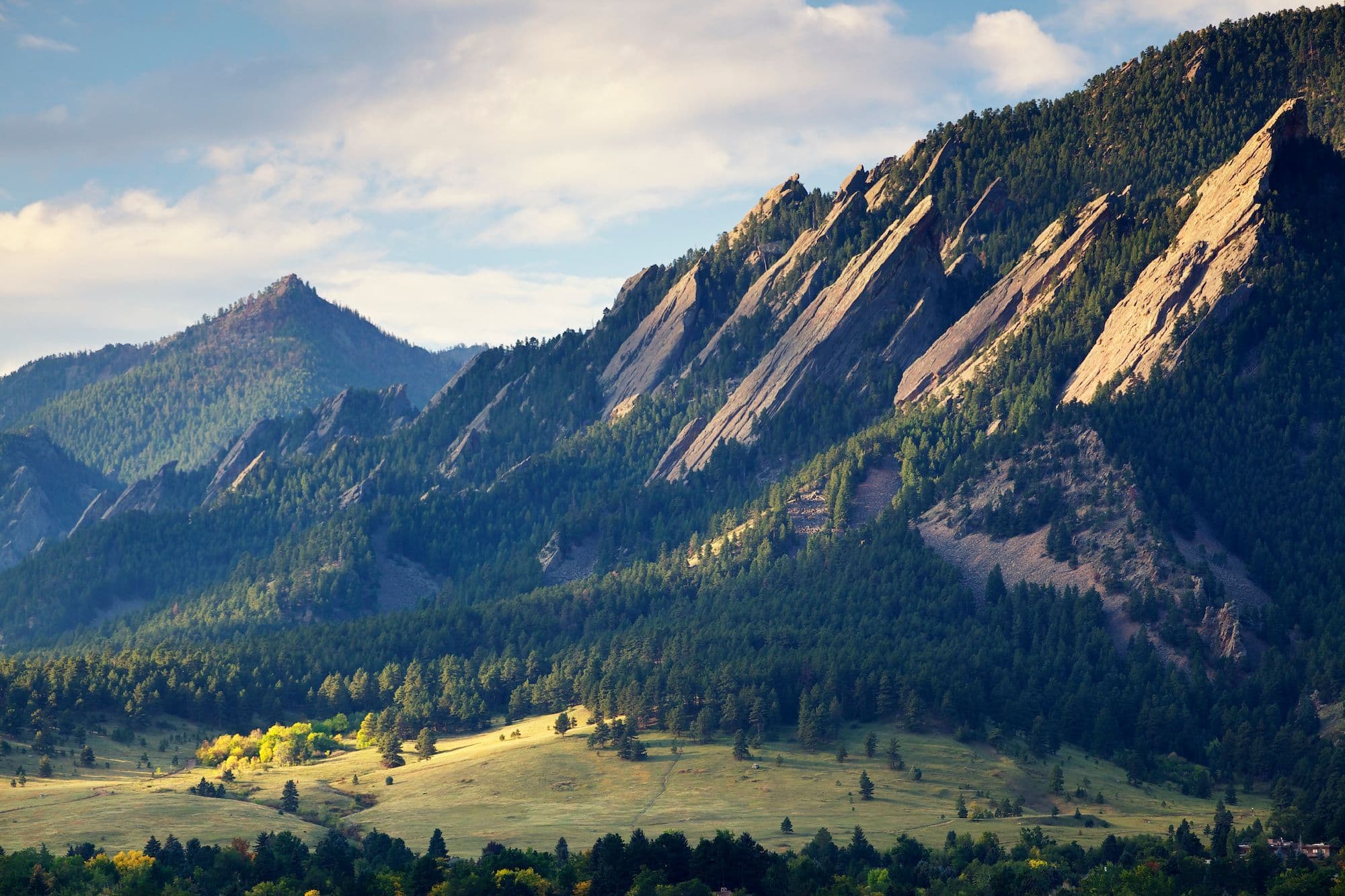
The Flatirons are five tilted slabs of Fountain Formation sandstone rising above Chautauqua Park on the east slope of Green Mountain — the rock face of Boulder, Colorado. Some 300 million years ago these layers lay flat beneath an inland sea; the collision that raised the Rocky Mountains tipped them up like a drawbridge, hardened and angled, to a high point of 7,132 feet. Numbered First through Fifth from north to south, they are what everyone means by "the Flatirons" — though dozens of smaller formations hide in the woods around them.
They are also a century-deep climbing landmark: the big east faces are low-angle, wildly featured, and offer some of the best beginner multi-pitch climbing in the United States. You can admire them from the meadow below, but this post is about the best part — standing on top. These are the five classic Flatiron climbs our guides never get tired of.
Direct East Face — First Flatiron
Quick stats: 5.6 · 10 pitches · 1,000 ft · Approach: ~40 min from Chautauqua
The First Flatiron’s Direct East Face is the route most visitors picture when they think of Boulder climbing. From the trail at Chautauqua, you can see the line’s full sweep — hundreds of feet of golden sandstone slab rising straight off the foothills. The climbing follows the path of least resistance up the center of the formation: long pitches of friction, sustained but never desperate, with positive holds that make the moves feel natural even for climbers new to multi-pitch terrain.
What sets it apart is the exposure. By the third pitch you’re climbing above Boulder, with the plains rolling east toward Denver. Most parties top out in 3–5 hours of moving time. For a first multi-pitch route, it’s hard to beat.
Guide’s tip — “bring lots of runners for the long pitches to minimize rope drag and be on the look out for opportunities for natural protection like slung horns” - AMGA Rock Guide Woody Lowder
Best for: first multi-pitch experience; confident scramblers stepping into roped climbing.
Watch out for: afternoon thunderstorms in summer; polished holds on the most popular sections.

Direct East Face — Third Flatiron
Quick stats: 5.5 · 10 pitches · 1,300 feet · Approach: ~45 min from Chautauqua
The Third Flatiron is the biggest of the formations — nearly 1,000 feet of climbing from base to summit — and the Direct East Face is its signature line. The route weaves through massive slabs and featured sandstone, with the angle staying friendly enough for moderate climbers but the scale building dramatically as you climb.
Where the First Flatiron rewards efficiency, the Third rewards endurance and route-finding. By the upper pitches you’re looking down on an amphitheater of slabs and back across to the First; it’s a route that makes the geography of the Flatirons feel large.
Best for: climbers who want a full-day, big-feeling objective at a moderate grade.
Watch out for: descent. The rappel and downclimb sequence catches first-timers — hire a guide if you haven’t done it before.

East Face — Second Flatiron
Quick stats: 5.2 · 6 pitches · 600 feet · Approach: ~30 min
The East Face of the Second Flatiron is the friendliest of the classics — low-angle slabs and natural ledges that let climbers move efficiently up the rock. For a first time on real multi-pitch terrain, it’s the easiest entry point of the five.
Don’t let “easy” mislead you, though: the summit views across Boulder Canyon and out toward Denver are as good as anything on the bigger formations, and the route stays interesting throughout. It’s a favorite for guided introductions and first multi-pitch days.
Best for: first-time multi-pitch climbers; families with confident teenage climbers.
Watch out for: choosing a starting line — several variations exist at different grades; your guide will pick the right one for the group.
East Face — Seal Rock
Quick stats: 5.4 · 8 pitches · 800 feet · Approach: ~30–40 min
Just south of the main Flatiron formations, Seal Rock offers the quieter, less-crowded alternative. The East Face climbs beautiful golden sandstone with fun movement and excellent exposure — and because Seal sees a fraction of the traffic the main formations do, the climbing feels remote despite the short approach.
It’s the route to recommend when somebody wants the Flatirons experience without the Flatirons crowds, or when conditions on the main face are wet from morning shade.
Best for: climbers who’ve done the main Flatirons and want something quieter.
Watch out for: route-finding — fewer people means fewer chalked-up holds to follow.
North Face — The Maiden
Quick stats: 5.6 · 5 pitches · 600 feet · Approach: ~45–60 min
Unlike the long slabs of the main Flatirons, The Maiden rises as a striking sandstone tower — and the North Face climbs steeper, more featured rock with airy movement. The summit feels like standing on a small island above the surrounding ridges, and the descent rappel is one of the most famous in Colorado.
This is the Flatirons climb for the climber who’s done the slab classics and is ready for something with more atmosphere. The grade is moderate but the exposure and run-out spacing make it a step up in seriousness.
Guide’s tip — “One of the best rappels of any flatiron. I think I enjoy it just as much as the climb!” - Joel Enrico AMGA Rock and Alpine Guide and Senior Guide at TMG
Best for: experienced climbers who want a unique summit and a true adventure feel.
Watch out for: spacing between pieces — this is not the route to lead if you’re still building gear-placement confidence.

What a Guided Flatirons Day Looks Like
One of the best things about climbing the Flatirons is how accessible they are. Most routes start with a short hike from the Chautauqua area, putting world-class climbing within minutes of downtown Boulder. A typical guided day with The Mountain Guides runs 6–8 hours total:
1. Meet your guide at the Chautauqua Trailhead.
2. 30–45 minute scenic hike to the base of your route.
3. 3–5 hours of climbing depending on the objective.
4. Summit break with views across Boulder and the plains.
5. Scenic descent and hike back to the trailhead.

We can provide all necessary climbing equipment — helmets, harnesses, ropes, and technical gear. Guests are welcome to bring their own gear, but it’s not required. See our rock climbing gear checklist for what to bring personally (footwear, layers, water).

Who Can Climb the Flatirons
The Flatirons reward climbers across the experience spectrum, which is why our guides choose different objectives based on what each group is ready for.
First-time multi-pitch climbers
The Second Flatiron and First Flatiron are the natural starting points. We focus on the fundamentals — belay transitions, rope management, efficient movement — while the climbing itself stays well within reach.
Climbers building toward harder objectives
The Third Flatiron and Seal Rock build the endurance and efficiency that pay off on bigger mountain routes. Many of our clients climb here as preparation for alpine objectives in Colorado, Wyoming, or the Tetons.
Experienced climbers seeking adventure
The Maiden is the goal for climbers who’ve done the slab classics and want a serious, unique objective. We tailor the day to your experience and the conditions.
Frequently Asked Questions
Do you need a guide to climb the Flatirons?
Technically no — the routes are publicly accessible — but most visiting climbers benefit significantly from a guide. The Flatirons demand efficient multi-pitch movement, careful route-finding, and a specific descent skill set that’s easy to underestimate. A guided day gets you on the rock fast, safely, and with someone who can choose the right route for the day’s conditions.
What’s the easiest Flatiron to climb?
The East Face of the Second Flatiron is generally the friendliest of the five classics — low-angle slabs and natural ledges, suitable for first multi-pitch experiences.
What’s the best time of year to climb the Flatirons?
Late spring through early fall (roughly April through October) is the standard season. The rock dries quickly after weather and the East Faces catch morning sun, so cool, clear days in May, June, September, and October are often the best of the year.
How long does it take to climb a Flatiron?
Most guided climbs run 6–8 hours door-to-door, including the approach, climbing (3–5 hours), and descent.
What climbing gear do I need to bring?
We provide all the technical gear (rope, helmet, harness, hardware). You bring approach footwear, climbing shoes if you have them, layers, water, and snacks. See our rock climbing gear checklist for the full list.
Climb the Flatirons with The Mountain Guides
From the sweeping slabs of the First Flatiron to the dramatic tower of The Maiden, these five routes represent the best classic climbing above Boulder. Our AMGA-certified guides have been leading climbers on these routes for decades, and we’d be glad to put together a day that matches your experience and goals. View our Climbing the Flatirons program → Craving steeper trad climbing just south of town? See our guide to climbing in Eldorado Canyon.


